The future of occupational therapy is now. At Pitt, we’re creating agents of change by immersing students in a wealth of innovative theories and approaches. Renowned faculty contribute breakthrough research that becomes best practices, while expanded clinical experiences challenge OTs to take their skills to the next level.
Choose from the best OT programs in the country. Whether you are seeking an entry level program that results in an OTD or a practicing clinician who is looking for advanced knowledge and proficiencies, Pitt OT programs will prepare you for a leadership role in a field that is constantly changing.
Stay connected with Pitt OT. Sign up for the NewsLink to learn more about what is happening with the department, students, faculty and alumni.
Our Mission
The Department of Occupational Therapy’s mission is to:
Educate entry-level professional students to practice evidenced-based occupational therapy in a variety of healthcare, community, and educational settings; manage occupational therapy service delivery; and contribute to the profession through service and participation in research;
Provide customized courses of study for post-professional students (masters and doctoral), designed to meet their individual learning needs and to enhance their ability to assume leadership roles in practice, education, research, program development, and program evaluation;
Provide continuing education for practicing therapists to facilitate their continued competence;
Plan and engage in research to advance occupational therapy (and rehabilitation) practice and education; and
Serve the University and public and professional communities through participation in University and community service and professional associations.
Our Vision
The University of Pittsburgh Department of Occupational Therapy will be nationally and internationally recognized as a leader in occupational therapy education, a pioneer in occupational therapy research, and a partner in regional practice and development.
Our History
1982 – The Department of Occupational Therapy and the program in occupational therapy (BS) were established in the School of Health Related Professions.
1985 – The entry-level baccalaureate curriculum was accredited by the Council for Allied Health Education and Accreditation (CAHEA), American Medical Association.The program in occupational therapy graduated its first students with a BS degree.
1990 – The entry-level baccalaureate curriculum was re-accredited by CAHEA.
1992 – The post-professional master’s program (MS) with an emphasis in occupational therapy was established in the School of Health and Rehabilitation Sciences (formerly titled the School of Health Related Professions).
1993 – The first students from the MS program with an emphasis in occupational therapy graduated.
1997 – The entry-level baccalaureate curriculum was re-accredited by the Accreditation Council for Occupational Therapy Education (ACOTE), American Occupational Therapy Association (AOTA).
1999 – The Department of Occupational Therapy began participating in the interdisciplinary doctoral program in rehabilitation science (PhD).
2000 – The entry-level master’s in occupational therapy (MOT) program was established and accredited by the ACOTE. The Beta Tau Chapter of Pi Theta Epsilon was established at the University of Pittsburgh.
2002 – The program in occupational therapy graduated its first students with an MOT degree.
2003 – The first student from the Department of Occupational Therapy graduated with a PhD degree.
2005 – The MOT program was re-accredited by ACOTE for a period of 10 years from academic year 2004/2005 to 2014/2015.
2012 – The MOT program was ranked 6th in the nation by U.S. News & World Report’s “Best Grad Schools” list.
2014 – The Doctor of Clinical Science (CScD) with an emphasis in occupational therapy was approved as a post-professional degree.
2015 – The MOT program was re-accredited by ACOTE for a period of 10 years from academic year 2014/2015 to 2024/2025.
2016 – The MOT program was ranked 4th in the nation by U.S. News & World Report’s “Best Grad Schools” list. The first students graduated from the CScD with an emphasis in occupational therapy program. The Doctor of Occupational Therapy program was approved and the OTD was established as a degree type at the University of Pittsburgh.
2017 – The Department of Occupational Therapy celebrates 35 years of excellence.
2018 – The post-professional Master of Science (MS) Program in Occupational Therapy was established in the School of Health and Rehabilitation Sciences.
2019 – The OTD program was accredited by ACOTE.
2020 – The OTD program was ranked 3rd in the nation by U.S. News & World Report’s “Best Grad Schools” list. The Department of Occupational Therapy graduated its first students with an OTD degree.
2023 – The Department of Occupational Therapy celebrates 40 years of excellence.
2024 – The OTD program was ranked 1st* in the nation by U.S. News & World Report’s “Best Grad Schools” list. *Tied for 1st place ranking.
2025 – The OTD program was ranked 3rd* in the nation by U.S. News & World Report’s “Best Grad Schools” list. *Tied for 3rd place ranking.
2026 – The OTD program was ranked 1st* in the in the nation by U.S. News & World Report’s “Best Grad Schools” list. *Tied for 1st place ranking.
The department does not have student assistant positions available. However, the program does inform students of employment opportunities they can pursue. Additionally, the program provides students with a list of financial resources – mainly scholarships external to the University – they can choose to pursue. Most scholarship eligibility requirements include matriculation into an OT program or having completed the first year of a program.
The following is a list of external scholarships or financial resources that have been identified by the Department of Occupational Therapy. The program encourages qualified students to consider applying for funds.
Please keep in mind that this list is not exhaustive; students may qualify for individual funds not listed. The program provides this list as a student service. If there is an organization not listed that would be recommended, please send the information to OTPitt@shrs.pitt.edu.
Research
The University of Pittsburgh has leading occupational therapy researchers looking for answers to guide occupational therapy practice. To achieve our goal to explore and test occupational therapy interventions, we have partnered with experts in many diverse fields: bioengineering, psychiatry, cardiology and gerontology to name a few. Our nationally recognized research laboratories have received Federal, Foundation and University funding.
If you are interested in learning more about research in occupational therapy, please contact us at otpitt@shrs.pitt.edu.
Research Areas
Pediatrics – rare disease (early onset pediatric disorders); early oral motor and feeding difficulties; intellectual and developmental delay; family impact and quality of life, Pediatric health promotion, novel approaches to parent-training, intervention development
Measurement – (quantitative and qualitative through focus groups and personal interviews) – clinic-based motor assessments; community-based outcomes; social participation and engagement; quality of life (child-proxy, parent)
Frailty, Physical Activity (older adults), Aging in Place, Goal Attainment Scaling, Examining factors that influence independent living for older adults who are at-risk for disability, older adults with mood and cognitive changes as well as caregivers of older adults who are themselves vulnerable to poor health and disability
Musculoskeletal disorders of the upper extremity, arthritis, ergonomics, particularly office ergonomics and dental ergonomics, computer use related to physical set up of the computer workstation, large dataset analysis and epidemiology
Hand rehabilitation
Complex intervention development to address cognitive impairments, mood disorders, disability
Occupational therapy students participate in many community service activities that benefit people of all ages and promote awareness of occupational therapy and its powerful impact on society.
Pittsburgh Symphony’s Heroes and Inspirations Sensory Friendly Concert:
Support for families of individuals with diverse sensory and cognitive abilities to participate in this community event (see video below).
Other examples of community service activities include:
Rebuilding Homes (Rebuilding Together) – previewed homes and made recommendations for home repairs for low-income homeowners in Allegheny County.
Car Safety (CarFit) – promoted the occupation of driving by hosting multiple CarFit events in Allegheny, Westmoreland and Erie counties to ensure a safe “fit” between drivers and their environment (i.e., their car).
Career Days (Investing Now; Health Career Scholars Academy: Assistive Technology) – introduced occupational therapy to middle and high school students through hands-on health and science learning programs.
Museum Redesign (Carnegie Museum) – redesigned the children’s exhibit areas to increase opportunities for interactive learning.
Kids Night Out (The Children’s Institute) – provided fun outings for children with special needs and their siblings, plus respite time for their parents.
Arthritis Walk (Arthritis Foundation) – raised funds and promoted awareness about arthritis.
OT Colloquium
Fall 2026 Colloquium
The Department of Occupational Therapy will host the 2026 Pitt OT Fall Colloquium as a virtual event on December 8, 2026, where current issues and the newest occupational therapy research, education and theory to create the best occupational therapy practice for the future will be discussed. The Colloquium will open with a welcome address from the Department Chair and Associate Professor Juleen Rodakowski. The Caroline Robinson Brayley Distinguished Lecture will be delivered by Assistant Professor Emily Grattan. The event will conclude with capstone presentations from our post-professional Doctor of Clinical Science (CScD) in Occupational Therapy students to showcase their innovative practice initiatives.
This event is open to Pitt OT students, alumni, fieldwork supervisors, educators, practitioners, community partners and friends of Pitt OT.
Emily Grattan is an assistant professor in the Department of Occupational Therapy at the University of Pittsburgh and will be delivering the Fall 2026 Colloquium’s Caroline Robinson Brayley Distinguished Lecture.
Emily Grattan’s current research program focuses on improving measurement and treatment of visual and perceptual impairments post stroke. Grattan has received funding from the Department of Veterans Affairs, National Institutes of Health and National Science Foundation to support her research. She also collaborates with investigators in the Department of Ophthalmology to advance low vision rehabilitation.
CScD in OT Capstone Presentations
As a requirement for the post-professional Doctor of Clinical Science in Occupational Therapy curriculum, students are mentored to identify and implement a quality improvement project in a clinical or educational setting. These projects demonstrate innovative ideas, methods for planning and implementing evidence-based programs and outcomes of value to clients, employers and reimbursement sources.
CScD students will present their work as scheduled below starting at 4:30 pm. Each presentation will be followed by questions and discussion. Participants will not have permission to share video/audio but may ask questions by typing in the chat window.
Stay tuned for additional details.
For questions regarding this event, please contact the Department of Occupational Therapy at OTpitt@shrs.pitt.edu.
Spring 2026 Colloquium
The Department of Occupational Therapy hosted the 2026 Pitt OT Spring Colloquium as a virtual event on April 28, 2026. The colloquium addressed current issues and highlighted the latest research, education and theory in occupational therapy to advance best practices for the future.
The Pitt OT Spring Colloquium opened with a welcome address from Associate Professor and Chair Juleen Rodakowski and an awards recognition ceremony to honor the 2026 recipients of the following awards:
Awards of Appreciation
Clinical/Community Educator Awards
Alumni Awards of Excellence
Next, the event continued with the Joan C. Rogers Distinguished Lecture. Kerri Morgan, PhD, OTR/L, Associate Professor at Washington University School of Medicine, delivered the distinguished lecture. The event concluded with capstone presentations from our post-professional Doctor of Clinical Science in Occupational Therapy (CScD) and our entry-level Doctor of Occupational Therapy (OTD) students.
This event was open to Pitt OT students, alumni, fieldwork supervisors, educators, practitioners, community partners and friends of Pitt OT.
Schedule of Events
3:00 – 3:30 p.m. Welcome and Awards 3:30 – 4:30 p.m. The Joan C. Rogers Distinguished Lecture 4:30 – 5:00 p.m. CScD Capstone Presentations 5:00 – 6:00 p.m. OTD Capstone Poster Session
Welcome Address from the Chair and Awards Recognition Ceremony
Alumni Awards of Excellence – For demonstrating the distinct value of occupational therapy in service and leadership
Kelsey Watters and Stacy Sue Rosello
Awards of Appreciation – For supporting the University of Pittsburgh Department of Occupational Therapy in research, education and service
Robin Zappin and Tina Harris
Excellence in Clinical/Community Education Award – For demonstrating dedication to high-quality education of occupational therapy students in Level I Fieldwork
Lori Mitterede (in tribute)
Excellence in Clinical/Community Education Award – For demonstrating excellence in occupational therapy practice, management, advocacy, and education in Level II fieldwork
Amanda Griffith
Joan C. Rogers Distinguished Lecture
Kerri Morgan, PhD, OTR/L, is an Associate Professor in Occupational Therapy and Neurology and the Director of Research in the Program in Occupational Therapy at Washington University School of Medicine. Dr. Morgan is a licensed and certified occupational therapist and rehabilitation scientist with expertise in disability, physical activity, implementation science, and community-engaged research. Her work focuses on generating evidence to guide rehabilitation and improve community participation among people with mobility disabilities after discharge from rehabilitation. Dr. Morgan’s research spans community-based studies and mechanistic investigations aimed at increasing physical activity, preventing secondary conditions, and promoting overall health for people who use wheelchairs for daily mobility. She is also deeply engaged in disability-focused community organizations through board service and advocacy to advance health and wellness. Beyond her academic and community roles, Dr. Morgan is an accomplished wheelchair athlete and three‑time Paralympian.
Lecture Title: Integrating Physical Activity into Daily life for People with Disabilities: Challenges and Strategies
People with disabilities experience significant barriers to physical activity, contributing to poorer health outcomes and higher rates of chronic disease. Although the benefits of physical activity are well established, people with disabilities remain one of the least active populations, and even those who are active often struggle to achieve meaningful health gains. Drawing from my lived experience as a wheelchair user, my clinical background as an occupational therapist, and my research centered on disability and physical activity, this keynote will explore why these gaps persist. I will highlight real‑world challenges faced by people with disabilities, the goals they identify for being active, and the feasibility of applying current physical activity guidelines in everyday community contexts. The presentation will also examine the current role of occupational therapy, both in research and clinical practice, in supporting and promoting physical activity. Importantly, I will discuss how OTs can frame physical activity as an occupation—a meaningful, integrated daily role—and how this perspective can foster sustained participation and better health.
Learning Objectives
Identify common personal, environmental, and systemic barriers that people with disabilities face when engaging in physical activity in community settings.
Explain how current physical activity guidelines align, or fail to align, with the needs and goals of people with disabilities living in the community.
Differentiate between therapeutic exercise delivered in rehabilitation and physical activity framed as a meaningful occupation that supports long-term participation.
CScD in OT Capstone Presentation
As a requirement for the post-professional Doctor of Clinical Science in Occupational Therapy (CScD) curriculum, students are mentored to identify and implement a quality improvement project in a clinical or educational setting. These projects demonstrate innovative ideas, methods for planning and implementing evidence-based programs and outcomes of value to clients, employers and reimbursement sources.
The Feasibility and Impact of the Operator Syndrome OT Toolkit to Support Occupational Therapy's Role in Mitigating Operator Syndrome Symptoms
Capstone Committee Members: Kelli Cabrera, OTD, CHT and Amy Hartman
Abstract: This quality improvement project aimed to manualize the role of occupational therapy in treating military members with operator syndrome. The Operator Syndrome OT Toolkit was developed and integrated into the existing 5by5 Reset™ program. Qualitative and quantitative data demonstrated successful feasibility and implementation during the pilot. The toolkit included targeted assessments and interventions addressing sleep performance, stress management, and occupational balance.
Comparison of High-Intensity Occupation-Based Training and Conventional Occupational Therapy in Inpatient Stroke Rehabilitation
Abstract: Emerging evidence supports the use of high-intensity training in post-stroke rehabilitation; however, its integration into occupational therapy remains limited. This presentation examines High-Intensity Occupation Training (HIOT), an intervention incorporating cardiovascular intensity into occupation-based practice to facilitate neuroplasticity and functional recovery. Findings from a retrospective, case-controlled study (N=68) demonstrate statistically significant improvements in cognitive function via a brief screen and in mobility via the IRF-PAI, supporting further investigation into intensity-driven occupational therapy interventions.
OTD Capstone Poster Sessions
This virtual poster session is the culmination of our Doctor of Occupational Therapy (OTD) students’ doctoral capstone experience, relating theory to practice and demonstrating synthesis of advanced knowledge.
Let’s Grow: An Adaptive Greenhouse Program Rooted in Inclusion
Site: Always B Smiling
OTD Peer Network: Morgan Bittner, Emily Clopp, Caroline Perry, Amanda Richardson and Rachel Romano
Practice Concentration / Focus Area: Home and Community Health / Developmental Disabilities
Abstract: Let’s Grow was a six-week gardening program for young adults with disabilities that was adapted to address stakeholder-identified needs for more immersive, accessible, and hands-on horticultural experiences. This program integrated an accessible greenhouse and expanded programming that enhanced inclusivity, skill development and community partnerships. Qualitative findings were used to guide future program development.
Objectives: At the conclusion of the session, participants will be able to
Describe the key components involved in developing inclusive programming that support skill development for participation in daily life within home and community settings.
Explain the benefits of utilizing an adaptive greenhouse to promote participation in associated programming.
Supporting the Supporters: A Dual Approach to Caregiver Wellbeing and Volunteer Growth
Site: Alzheimer’s Association Greater PA Chapter
OTD Peer Network: Emma Arduin, Cindy Iheanacho, Katiana Oviedo and Olivia Roncace
Practice Concentration / Focus Area: Productive Aging / Gerontology
Abstract: Following a needs assessment at the Alzheimer’s Association Greater PA Chapter, key issues identified were caregiver mental health decline and low volunteer retention. Current evidence highlights caregiver role overload and benefits of self-efficacy, as well as volunteer retention through flexibility, recognition, and growth. A dual OT-led approach was developed to support caregiver wellbeing and strengthen long-term volunteer engagement.
Objectives: At the conclusion of the session, participants will be able to
Recognize caregiver mental health needs and explain the specific mental health challenges faced by Alzheimer’s and other dementia caregivers and identify accessible resources that can support their well-being.
Articulate the key factors contributing to volunteer decline and describe strategies to increase long-term volunteer engagement and retention.
Fostering Community Through Stakeholder Engagement at Beacon Communities
Site: Beacon Communities
OTD Peer Network: Sydney Boyer, Sydney Haridahesti, Claudia Pearce, Sara Real, Sarah Wallace
Practice Concentration / Focus Area: Home & Community Health / Health & Wellness
Abstract: Our project develops and sustains community programming to enhance well-being for residents of two low-income apartment communities in Pittsburgh, PA. Using a holistic approach addressing the 8 dimensions of wellness, we engage stakeholders, residents and local organizations, to create tailored programs promoting wellness and community cohesion. This initiative contributes evidence on methods to engage stakeholders and promote social participation.
Objectives: At the conclusion of the session, participants will be able to
Understand the methods of stakeholder engagement when developing community programming.
Determine how to synthesize site and population information to create a sustainable framework.
Stronger Together: A Resource Library to Assist Families and Staff in Supporting Children with Autism Spectrum Disorder & Developmental Disorders
Site: Center for Autism and Developmental Disabilities (CADD), Therapeutic Early Autism Program (TEAP)
OTD Peer Network: Carlee Beierle, Micha Botes, Jackie Chhay, Sydney Hollingsworth and Keerston Underkoffler
Practice Concentration / Focus Area: Developmental Disabilities / Advocacy
Abstract: Caregivers of children with Autism Spectrum Disorder face challenges in navigating services and maintaining well-being. This project creates an evidence and occupation-based multimodal educational toolbox to increase caregiver knowledge, confidence and capacity. These resources equip caregivers with practical skills to support their well-being. Accessible and practical resources reduce caregiver burden while balancing life with a child with a developmental disorder.
Objectives: At the conclusion of the session, participants will be able to
Identify resources for the autism/ developmental disorder community through a multimodal caregiver toolbox.
Describe strategies to support the well-being and community building amongst caregivers of children with autism/ developmental disorders.
Pathways to Independence: An Occupational Therapy Service Guide for Community-Based Organizations Supporting Individuals with Disabilities
Abstract: This project develops an Occupational Therapy Standard Operating Procedures Manual to support a community-based organization for individuals with intellectual disability in establishing OT services, including guidance on funding, staffing, best-practice evaluations and interventions. By focusing on program development and evaluation, it advances OT practice by providing a clear, replicable framework for integrating occupational therapy into community-based organizations.
Objectives: At the conclusion of the session, participants will be able to
Develop a better understanding of the role of occupational therapy in a community-based setting for individuals with intellectual disability.
Identify resources and key considerations required for employment of an occupational therapist in a community-based setting for individuals with intellectual disability.
Opening Doors Beyond the Threshold: Expanding Home Modification Services
Site: Havenside
OTD Peer Network: Kailey Bitonti, Yasmin Gonzalez, Lauren Hirshouer, Shelby Ligo and Taylor Zerby
Practice Concentration / Focus Area: Productive Aging / Home & Community Health
Abstract: This poster will describe the process of expanding home modification services beyond older adults with the development of a sustainability toolkit that includes a plan for education materials, a lifespan evaluation guide for staff, client follow up and satisfaction surveys.
Objectives: At the conclusion of the session, participants will be able to
Understand the process of how to obtain home modifications.
Understand resources to increase awareness of home modification services in the community.
Empowering Jeremiah’s Place Staff and Volunteers Through Resources: The Sensory Support Toolkit
Site: Jeremiah’s Place
OTD Peer Network: Shruthi Anand, Morgan Blanchflower, Bonnie Freiman, Grace Preede and Sarah Schreiber
Practice Concentration / Focus Area: Children & Youth / Sensory Integration & Processing
Abstract: This poster presents the development and implementation of an evidence-based sensory support toolkit and staff training program for a crisis nursery serving children ages 0–6 experiencing trauma. The project aimed to build staff competency in recognizing sensory needs, implementing regulatory strategies, supporting children’s occupational performance and daily participation, and partnering with families/caregivers.
Objectives: At the conclusion of the session, participants will be able to
Participants will be able to identify sensory strategies to utilize with young children experiencing trauma in order to support regulation and occupational performance.
Participants will be able to articulate how a sensory resource toolkit and hands-on staff training can support staff competency and improve outcomes for young children experiencing trauma in a crisis nursery setting.
Occupational Therapy for Health & Housing: Supporting the Transition from Street to Permanent Housing
Practice Concentration / Focus Area: Home & Community Health / Home & Community Wellness
Abstract: Individuals will learn about the role of occupational therapy working with the population of people experiencing homelessness. The STABLE tool is an exemplar specifically created for use with the population of people experiencing homelessness. This specificity supports the work occupational therapy practitioners do in this setting, making considerations relevant to survival, adaptation, and integration aspects of the experience of homelessness.
Objectives: At the conclusion of the session, participants will be able to
Have an understanding of the STABLE assessment tool and how its use guides clinical practice when working with the unhoused population.
Understand the role of occupational therapy in supporting individuals from street to permanent housing.
Together We REACH: Reinforcing Education, Adherence and Caregiver Health Literacy for the Intensive Strength Clinic
Practice Concentration / Focus Area: Children & Youth / Physical Rehabilitation
Abstract: This project implements a multimedia format education model, including a centralized video database and “teach-back” methods, to address patient carryover, health literacy and the accessibility of home program resources. Reach for Speech aims to enhance caregiver carryover of pediatric intensive strengthening programs using the Universal Exercise Unit. Using PDSA cycles, this initiative strives to improve clinical outcomes and long-term adherence for patients aged 3–15.
Objectives: At the conclusion of the session, participants will be able to
Identify the purpose and benefits of the updated Reach for Speech intensive strength program using the UEU (Universal Exercise Unit).
Recognize the need for health literacy and evidence-based practice to increase the carryover of muscle preparation and home exercise program materials amongst parents and caregivers.
Making Sense of Sensory: Occupational Therapists Empowering Caregivers Through Education
Site: UPMC Children’s Hospital of Pittsburgh
OTD Peer Network: Kristin Asa, Taina Bey, Araminta Cheek, Gianna Giovinco, Sofia Rojas
Practice Concentration / Focus Area: Children & Youth / Sensory Integration & Processing
Abstract: This project aimed to improve consistency and caregiver understanding of sensory-based care through the development and implementation of standardized, caregiver-friendly, evidence-based education tools for pediatric outpatient occupational therapy practice.
Objectives: At the conclusion of the session, participants will be able to
Identify features of caregiver educational materials, such as plain language, visuals, and routine-based strategies, and understand how readability (SMOG Index) supports accessibility.
Recognize barriers to consistent sensory-based caregiver education in UPMC Children’s sites, including variability of materials, limited access, and difficulty translating concepts into daily routines.
Educate, Enhance, and Empower Future Hand/Upper Extremity Occupational Therapists
Site: UPMC Rehabilitation Institute
OTD Peer Network: Abby Best, Kristen D’Elia, Matt Monte and Tyler Radziszewski
Practice Concentration / Focus Area: Academic Education (includes Fieldwork) / Hand & Upper Extremity
Abstract: This presentation describes the development of structured Level II Fieldwork guides for occupational therapy students in hand therapy outpatient placements, grounded in AOTA and ACOTE standards. The guides emphasize skill-based progression, clinical reasoning, and consistent support. This topic advances OT practice by promoting student readiness for entry-level hand therapy practice and supporting fieldwork educators in delivering high-quality, standardized learning experiences.
Objectives: At the conclusion of the session, participants will be able to
Identify how the Clinical Resource Guide, Fieldwork Guide, and the CHT Pathway Guide supports progressive development of entry-level hand therapy competencies, including clinical reasoning, professional development, and occupation-centered evidence-based interventions.
Describe the rationale and evidence-based considerations used to design a Level II Fieldwork Clinical Resource Guide, Fieldwork Guide, and CHT Pathway Guide for occupational therapy students in hand therapy placements.
The Moments that Matter: A Volunteer Guide to Meaningful Activities
Site: Vincentian Home
OTD Peer Network: Shannon Bunney, Molly Kenny, Mia Lucente, Taylor McVay, Charmé Morgan
Practice Concentration / Focus Area: Productive Aging / Cognition
Abstract: This project describes the Moment that Matter: A Volunteer Guide to Meaningful Activities, a dementia-friendly toolkit developed to improve volunteer engagement and resident activity participation in a long-term care setting. Using occupational therapy principles, it provides tiered training, activity guides, and communication strategies to build volunteer confidence and promote safe, person-centered engagement for residents with dementia.
Objectives: At the conclusion of the session, participants will be able to
Apply dementia-friendly engagement strategies by aligning volunteer roles with resident needs to support meaningful activity participation.
Adapt activity strategies to best align with specific volunteer experience levels and resident needs.
For questions regarding this event, please contact the Department of Occupational Therapy at OTpitt@shrs.pitt.edu.
American Occupational Therapy Association
Conference
Each year, Pitt Occupational Therapy (OT) alumni, students, and faculty make a significant impact at the AOTA annual conference and expo. If you’re heading to Anaheim, explore this page to learn how you can connect with the Pitt OT network!
Pitt at AOTA 2026
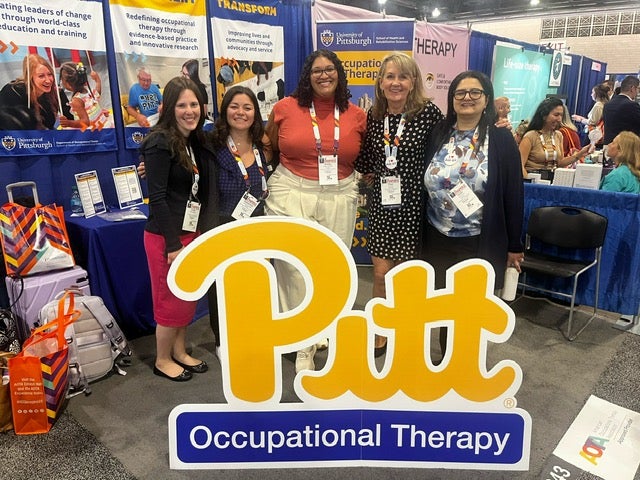
Visit us at booth #653 to say hello and chat with Pitt OT faculty. We’d love to see you!
Exhibit hours are as follows:
Thursday, April 23: 12:30 – 5 p.m.
Friday, April 24: 10 a.m. – 5 p.m.
Saturday, April 25: 9 a.m. – 2 p.m.
Posters and Presentations Schedule
Experience the breadth and depth of scholarship from our alumni, students and faculty. Below are the highlighted sessions that feature Pitt OT.
Congratulations to Cara Lekovitch, who will be receiving the AOTA Roster of Fellows Award
The Roster of Fellows recognizes occupational therapists who through their knowledge, expertise, leadership, advocacy and/or guidance have made a significant contribution over time to the profession with a measured impact on consumers of occupational therapy services and/or members of the Association.
Congratulations to Ann Marsico, who will be receiving the Recognition of Achievement Award
The Recognition of Achievement award recognizes occupational therapy practitioners who have made notable contributions to the profession and its consumers in a focused area of occupational therapy practice.
Congratulations to Ketki Raina, who will be receiving the Outstanding Mentor Award
The Outstanding Mentor Award recognizes occupational therapy practitioners (clinician, educator or researcher) who have demonstrated outstanding mentoring of a student, colleague or employee in a sustained partnership in practice, academic or research contexts, wherein mutual respect, guidance and knowledge is shared.
AOTA Student Membership
Pitt OT received Gold-Level for AOTA’s 2025-2026 Student Membership Circle (100% student involvement).
The Student Membership Circle program celebrates academic institutions with exceptional student member engagement.
Pennsylvania Occupational Therapy Association
Each year, Pitt Occupational Therapy (OT) alumni, students and faculty make a significant impact at the POTA annual conference. If you’re heading to Elizabethtown, PA, explore this page to learn how you can connect with the Pitt OT network.
Sponsorship
Pitt OT is a POTA Bronze-level sponsor in 2026 and attendees will have the opportunity to connect with faculty at a table on Saturday in Hoover 212 between 12:30 p.m.- 4:30 p.m.
Academic Program POTA Supporter
The Pitt Occupational Therapy program is proud to be recognized by the Pennsylvania Occupational Therapy Association (POTA) as an Academic Program POTA Supporter. This distinction reflects 100% faculty membership participation in POTA, demonstrating a unified commitment to professional engagement, advocacy, and excellence within the field. Pitt OT is honored to receive this recognition and looks forward to continued collaboration with POTA in advancing the profession.
Annual Awards
Congratulations to Assistant Professor Dominique Como for being the recipient of the POTA Research Award. A wonderful recognition of your hard work and commitment to the field. Congratulations, Dominique Como!
The award will be presented at the POTA Awards Ceremony on Saturday, September 26 at 6 p.m.
Posters and Presentations
Experience the breadth and depth of scholarship from our alumni, students and faculty. Here are some highlights of the presentations that will be presented at the POTA Conference this year:
Saturday, September 26, 2026
Cultivating Capacity, Connection, and Care in International Service-Learning
Time: 3:30-4:20 p.m.
Location: Esbenshade 373; Panel Discussion: 1.11: Conversations that Matter
Speakers and Presenters:
Rachel Shoener, OTR/L, FVRS
Mindy MacRone-Wojton, DSc, OTR/L
John Patro
Tamera Keiter Humbert, D.Ed., OTR/L, FAOTA
Terri Reichley Dennehy, D.Ed., OTR/L
Daniel Panchik, D.Sc., OTR/L
Erica A. Pugh, OTD, OTR/L OT
Stephen B. Kern, Ph.D, OTR/L, FNAP, FAOTA
Erin Mathia CScD, OTR/L
Chritans Unrban, OTD, OTR/L, ASDCS
Kimberly Pachik, OTD, OTR/L
Sleep Through Two Lenses: Child and Caregiver Comparison
Time: 3:30-4:20 p.m.
Location: McCormick Gallery; Poster Session: 3.23
Speakers and Presenters:
Dalia Toth, OTS
Amy Hartman, PhD, OTR/L
Tracey Murray
Isabel Brovender (OTS)
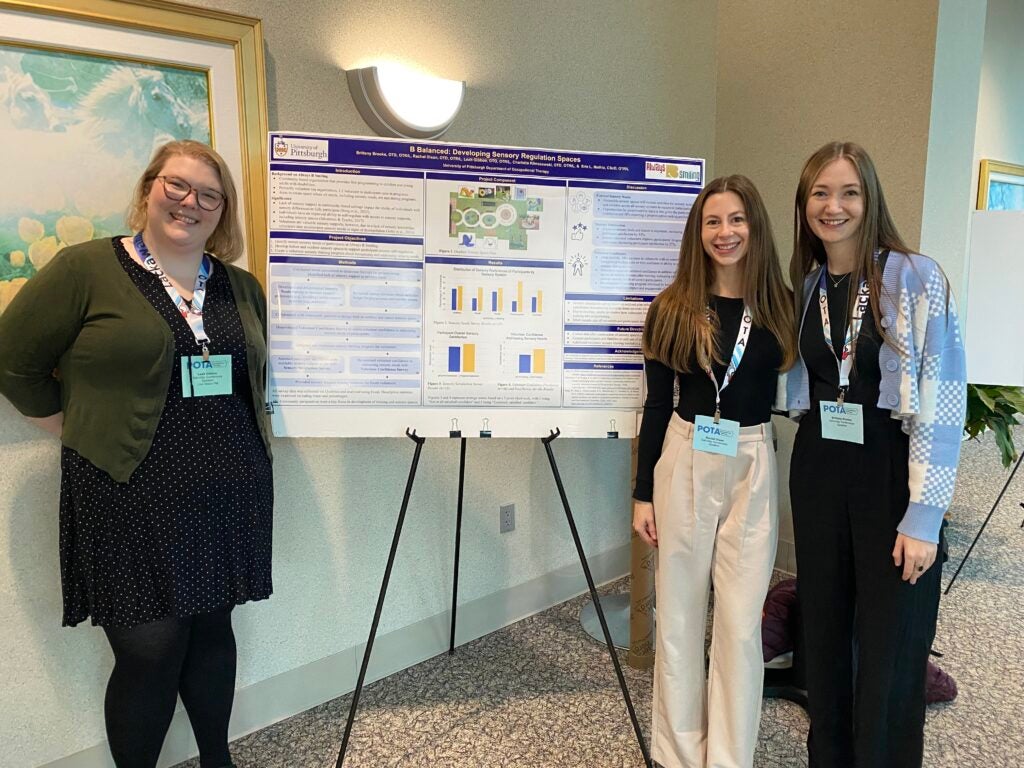
Making Sense of Sensory: Occupational Therapists Empowering Caregivers Through Education
Time: 3:30-4:20 p.m.
Location: McCormick Gallery; Poster Session: 3.33
Speakers and Presenters:
Gianna Giovinco (OTD’26)
Taina Bey (OTD ’26)
Kristin Asa (OTD ’26)
Araminta Cheek (OTD ’26)
Sofia Rojas (OTD ’26)
Sunday, September 27, 2026
Community Perspectives from Interprofessional Service-Learning in Belize
Time: 8:00-9:00 a.m.
Location: McCormick Gallery; Poster Session: 1.15
Speakers and Presenters:
Cristina Urban, OTD, OTR/L, ASDCS
Amanda Stilianos, OTD, OTR/L, CDP
Erin L. Mathia, CScD, OTR/L
Brynn Newcomb, OTR/L
Robin Zappin, PT, EdD
Soo Y. Sun, PT, PhD
Kathryn Veazey, PhD
Stephen Vandenberg, PT, DPT
Pamela Unger, PT, DPT
James O’Donohue, PT, DPT
Empowering Crisis Nursery Staff Through a Sensory Toolkit
Time: 9:00-9:50 a.m.
Location: Esbenshade 370; 50-minute session
Speakers and Presenters:
Morgan Blanchflower (OTD ’26)
Sarah Schreiber (OTD ’26)
Shruthi Anand (OTD ’26)
Bonnie Freiman (OTD ’26)
Grace Preede (OTD ’26)
Kimberly Krebs, OTD, OTR/L, BCP, IBCLC
Fieldwork Transition: An Educator and Student Perspective
Students can find access to program and school materials in the Current Student Resource Hub. Pitt Passport is required.
Current Students can also find answers to commonly asked questions and connect with valuable resources and contacts. This resource helps students locate academic guidance, professional development, or support for each individual’s wellbeing including things like counseling or study resources.
Resources for Pitt OT Fieldwork Educators
Pitt OT faculty collaborates with Fieldwork Educators to prepare students to deliver high-quality occupational therapy services. We recognize the expertise of Fieldwork Educators and their highly valuable commitment to student education.
Pitt OT Fieldwork Educator Sessions
The University of Pittsburgh Department of Occupational Therapy is excited to announce the 2026 virtual educational sessions! New this year are two Special Feature sessions. These sessions will showcase the educational content provided to students within the Pitt OTD program, specifically highlighting topics that fieldwork educators are likely to encounter or observe during student placements.
As a Pitt OT partner, you are essential to the success of our students and to the future of occupational therapy. Advance your skills and earn one professional development contact hour per session.
Save the Date for 2026 Sessions
All sessions are from 6-7 p.m. and virtual over Zoom.
September 22, 2026 | Special Fieldwork Feature: Use of AI in Clinical Practice
Learn how to support students in the appropriate use AI in clinical practice.
November 3, 2026 | Fieldwork Preparation: Level II Fieldwork Evaluation and Scoring
Learn how to evaluate and score students in Level II fieldwork.
The Performance Assessment of Self-care Skills (PASS) is a valid and reliable tool designed to measure occupational performance of daily life tasks. The PASS is a client-centered, performance-based, criterion-reference, observational tool that assists occupational therapy practitioners to objectively document occupational performance and plan occupation-based interventions for adolescent, adult, and older adult populations in a variety of settings. We hope you find the PASS to be a useful tool for your clinical practice, educational instruction and/or scientific projects.
Learn more about the PASS
The PASS consists of 26 core tasks, categorized in four domains. The PASS includes 5 functional mobility (FM) tasks, 3 basic activities of daily living (BADL) tasks, 4 instrumental activities of daily living (IADL) tasks with a physical emphasis, and 14 IADL tasks with a cognitive emphasis.
If you are interested in learning more about the PASS and using the PASS in your clinical practice, educational instruction and/or scientific projects, please complete a brief survey at PASS Survey.
Once you complete the survey, you will receive access to the PASS webpage.
On the web page, you will find all the materials you need to learn and administer the PASS, including the Clinic and Home versions of the PASS with administration materials; the Scoring Guidelines (manual); and access to the Administration and Scoring Videos. The web page also includes WeePASS materials.
To provide the best experiences, we use technologies like cookies to store and/or access device information. Consenting to these technologies will allow us to process data such as browsing behavior or unique IDs on this site. Not consenting or withdrawing consent, may adversely affect certain features and functions.
Functional
Always active
The technical storage or access is strictly necessary for the legitimate purpose of enabling the use of a specific service explicitly requested by the subscriber or user, or for the sole purpose of carrying out the transmission of a communication over an electronic communications network.
Preferences
The technical storage or access is necessary for the legitimate purpose of storing preferences that are not requested by the subscriber or user.
Statistics
The technical storage or access that is used exclusively for statistical purposes.The technical storage or access that is used exclusively for anonymous statistical purposes. Without a subpoena, voluntary compliance on the part of your Internet Service Provider, or additional records from a third party, information stored or retrieved for this purpose alone cannot usually be used to identify you.
Marketing
The technical storage or access is required to create user profiles to send advertising, or to track the user on a website or across several websites for similar marketing purposes.